
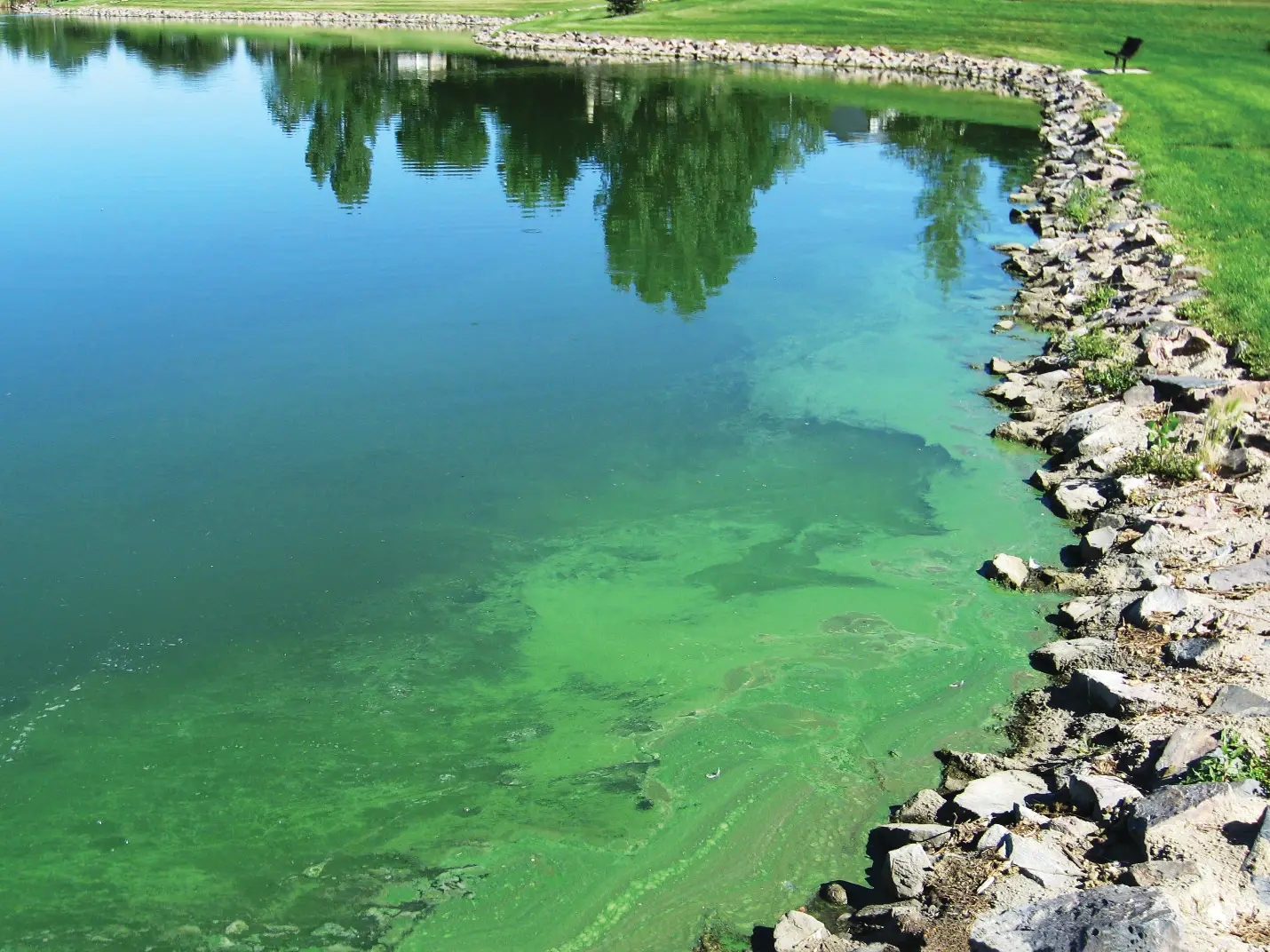
As temperatures rise during the summer months, local ponds and waterways often experience a rapid growth of algae known as an algal bloom. Residents and businesses play an important role in reducing algal blooms and keeping Broomfield’s stormwater clean.
Algal blooms occur when a specific “recipe” of environmental conditions is met: warm water temperatures, prolonged exposure to sunlight, and an abundance of nutrients like nitrogen and phosphorus. While some algae are natural, excessive growth can create dense mats that block light and deplete oxygen levels. This can lead to fish kills and produce unpleasant odors.
Harmful algal blooms, which consist of cyanobacteria, can produce toxins harmful to both people and pets. When it rains or snow melts, stormwater flows over lawns, driveways, and streets, picking up pollutants along the way. Because storm drains lead directly to Broomfield waterways without being treated, whatever enters the storm drain ends up in local ponds. This is where residents and business owners can make a big difference.
Excess fertilizers, yard debris, and pet waste are primary sources of the phosphorus and nitrogen that trigger these ecological imbalances. You can help reduce algal blooms by:
- Limiting fertilizer: This reduces the amount of excess nitrogen and phosphorus that washes into storm drains.
- Scooping the poop: This prevents harmful bacteria and nutrients from pet waste from entering local water bodies.
- Clearing yard debris: This keeps leaves and grass clippings out of the drainage system to prevent nutrient decay.
The City and County of Broomfield’s Water Quality team actively monitors for algal bloom toxins and posts warning signs near affected locations when the health of people and pets may be of concern. If you encounter a posted warning sign, keep yourself and pets away from the water; do not drink, ingest, or swim.
Not all algal blooms are treated the same. While some blooms are natural, management and treatment depends on their severity, and in some cases, a good rain event is required to help restore the area and allow natural remediation of the algal bloom to occur. Depending on the type of algae and where it is located, CCOB staff may perform treatment on the pond to reduce the algal bloom.
By watching what you allow to run into storm drains, you can directly reduce the frequency and severity of algal blooms, keeping community ponds healthy and safe for everyone. Find more information or report algal blooms at Broomfield.org/Stormwater.